Tango-class
Ex-USSR submarine, introduced in 1972, utilized three diesel engines for propulsion. Key figures: displacement 3,100 tons, length 91 m, top speed 13 knots, crew 62, built 18. In service with 1 navy — Russia.
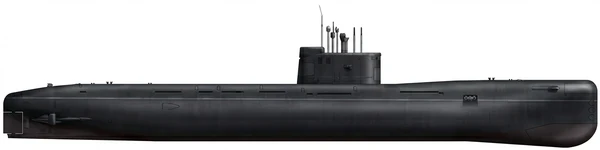
| Subtype | Diesel-electric submarine |
| Displacement | 3100 tons |
| Displacement submerged | 3800 tons |
| Crew | 62 members |
| Width | 9.1 m (29.9 ft) |
| Length | 91.0 m (298.6 ft) |
| Max. depth | 300 m (984.3 ft) |
| Propulsion | 3 diesel engines 4.6 MW (6,200 shp), 3 electric motors, 3 shafts |
| Units | B-380, B-307, B-396, B-515, B-319, B-474 |
| Range | 14,000 nm at 8 knots |
| Endurance | 7 days |
| Maximum speed | 13 knots |
| Max. speed submerged | 16 knots |
- 6 x 533 mm (21.0 in) bow torpedo tubes
- 24 x 533 mm (21 in) anti-submarine and anti-ship torpedoes or equivalent load of mines
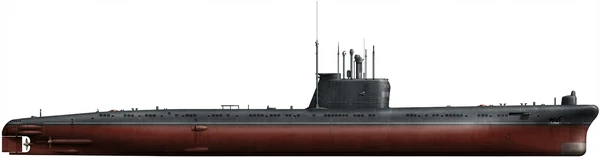
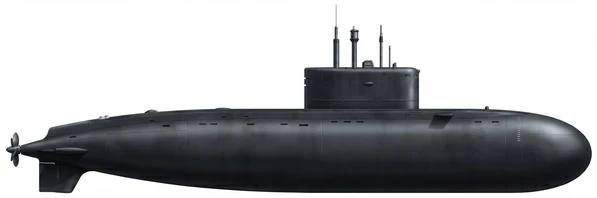
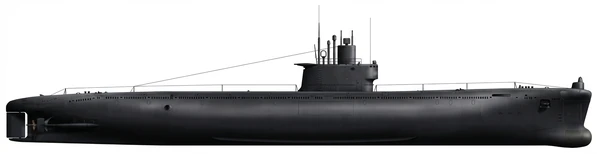
Description
The Tango class, designated Project 641B Som (Catfish) by the Soviet Union, was a class of diesel-electric submarines developed to succeed the Foxtrot class. Produced at Gorky, the first vessel was completed in 1972. A total of 18 submarines were built in two variants, with the later version featuring an increased hull length to accommodate anti-submarine warfare (ASW) missile equipment.
The design utilized the same propulsion plant as the final subgroup of the Foxtrot class but incorporated a higher battery capacity, resulting in increased pressure hull volume. This configuration allowed for underwater endurance exceeding one week without the use of a snorkel. The bow sonar installations were similar to those utilized on Soviet nuclear attack submarines. The hull was finished with a rubber coating, leading to the nickname "rezinka" (rubber). These design characteristics were intended for ambush operations against nuclear submarines at maritime chokepoints.
The Soviet Navy assigned the Tango class to the Northern and Black Sea Fleets. The class entered commission in 1972 and remained in service until 2016. B-380 of the Black Sea Fleet was the final unit decommissioned. Following a period of layup in Sevastopol, B-380 capsized and partially sank in December 2019 when the floating dock PD-16 foundered. Scrapping of the vessel began in May 2020.
Three units of the class are preserved as museum ships. B-307 is located at the AvtoVAZ Technical Museum in Tolyatti, Russia; B-396 is stationed at the Moscow Navy Museum; and B-515 is located in Hamburg, Germany. The conning towers of B-319 and B-474 are on display in Polyarny and Ryazan. Additionally, the sail of B-380 was installed as a monument in the Moscow district in 2021.
Frequently Asked Questions
What type of ship is the Tango-class?
What is the displacement of the Tango-class?
What is the maximum speed of the Tango-class?
What is the range of the Tango-class?
How many crew members serve on the Tango-class?
How many Tango-class ships have been built?
Which countries operate the Tango-class?
- JUL 232026 Updated Sources and cross-references refreshed
- APR 72026 Updated Description updated in a site-wide editorial pass
- JAN 242026 Updated Range and range at cruise speed updated
- JAN 182026 Updated Endurance added; type, units and 7 more fields updated