Nicaragua Military Forces
Nicaragua ranks #111 of 170 militaries worldwide in 2026, with 12,000 active troops. The Nicaraguan Army fields 89 main battle tanks; the Air Force flies 17 aircraft. Nicaragua has no nuclear weapons.
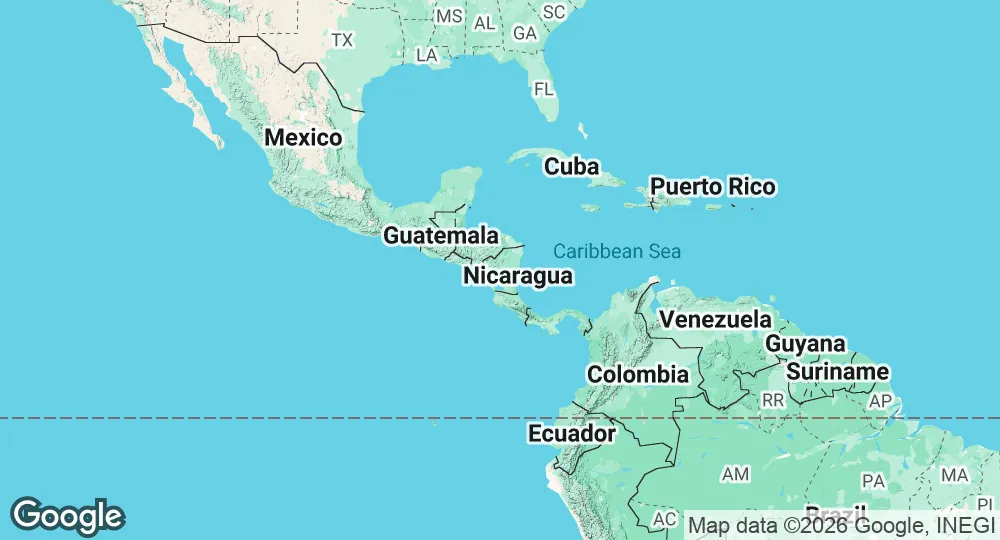
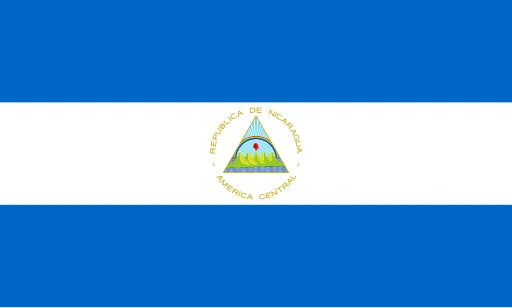
Armed Forces in 2026
| Domain | Strength | Composition |
|---|---|---|
| Nicaraguan Army Air Force | 17 aircraft | 11 helicopters |
| Ground Forces | 89 tanks | |
| Personnel | 12,000 active |
ATLAS Index (Aggregate Total of Land, Air and Sea strength)
Full ranking →| Pillar | Weight | Score | Basis |
|---|---|---|---|
| Manpower | 10% | 23.5 | Active, reserve & paramilitary personnel |
| Ground forces | 20% | 27.8 | ARMS inventory power: armour & artillery by type and era, attack helicopters, armament |
| Naval power | 20% | 0.0 | SEAS inventory power: hulls by type, size and era, air wing, sustainment, armament |
| Air power | 25% | 12.6 | AIRS inventory power: aircraft by type and generation, enablers, armament |
| Nuclear deterrent | 10% | 0.0 | No declared nuclear capability |
| Defense budget | 15% | 10.2 | Annual spending, purchasing-power adjusted |
| Availability | modifier | ground ×0.80 · naval ×1.00 · air ×0.86 | Budget per point of each force, from the branch indexes |
Country File
| Population | 6.9M (2024) |
| GDP | $19.7 billion (2024) |
| GDP per capita | $2,848 |
| Military budget | $98M (2024) |
| Share of GDP | 0.5% (2024) |
| Military spending per capita | $14 (2024) |
| Inflation rate | 4.62% (2024) |
| Capital | Managua |
| Region | America |
| Land area | 119,990 km² |
| Coastline | 910 km |
| Land borders | 1,231 km |
| Bordering countries | 2 |
| Currency | NIO |
Strategic Overview in 2026
Strategic Position
Nicaragua’s defense posture is defined by its alignment with non-Western powers, specifically Russia and China, and its rejection of United States influence in the Western Hemisphere. The government describes the country as a strategic regional platform for Russian influence in Central America. Security doctrine prioritizes national sovereignty, territorial integrity, and internal stability against perceived external interference and organized crime.
Nicaragua is a member of the Bolivarian Alliance for the Peoples of Our America (ALBA) and maintains a "strategic partnership" with China, formalized in late 2023. Bilateral military cooperation with Russia is institutionalized through annual presidential decrees that authorize the presence of Russian personnel, ships, and aircraft for training, exchange, and humanitarian purposes. These agreements were renewed for the 2025–2026 period.
Regional relationships are characterized by persistent maritime and border tensions. Nicaragua maintains a long-standing dispute with Colombia over maritime boundaries in the Caribbean Sea and has periodic friction with Costa Rica regarding navigation rights and environmental management of the San Juan River.
Military Forces
The Ejército de Nicaragua (Army of Nicaragua) is a unified command structure comprising the Land Forces, Naval Force, and Air Force. The President serves as the Supreme Commander-in-Chief. Total active personnel is estimated at approximately 12,000 to 15,000, supported by a reserve force and the National Police, which can be integrated into the military command during national emergencies.
Land Forces
The Army is the dominant branch and maintains the most significant inventory of heavy equipment in Central America, primarily of Soviet and Russian origin.
-
Armor: Operates T-72B1 main battle tanks and maintains older T-55 tanks in reserve. Armored capability includes BMP-1 infantry fighting vehicles and various armored personnel carriers, including BTR-60, BTR-70M, and BTR-80 models.
-
Artillery and Air Defense: Utilizes BM-21 Grad multiple rocket launchers and towed D-30 howitzers. Air defense is provided by man-portable systems and ZU-23-2 anti-aircraft guns, with new units delivered in 2025.
Naval Force
The Fuerza Naval is focused on Exclusive Economic Zone (EEZ) patrolling and counter-narcotics operations.
- Vessels: Operates two Damen Stan Patrol 4207 corvettes (the Soberanía class) acquired from the Netherlands. The fleet also includes Israeli-built Dabur-class patrol boats and various Russian-made coastal patrol craft.
Air Force
The Fuerza Aérea de Nicaragua (FAN) prioritizes transport, logistics, and rotary-wing operations over air superiority.
- Aircraft: Operates Mi-17V-5 and Mi-8 transport helicopters. Fixed-wing assets include Antonov An-26 transport planes, three of which were delivered in early 2025. Training and light utility roles are filled by Cessna and Beechcraft platforms.
Defense Industry
Nicaragua maintains a limited domestic defense industry centered on the Industria Militar Coronel Santos López. This entity focuses on the repair and maintenance of existing Soviet-era hardware, the production of small arms ammunition, and the manufacturing of military uniforms and tactical gear. The country remains almost entirely dependent on imports and foreign aid for complex weapons systems. Recent procurement has shifted toward Chinese suppliers, with a contract signed in May 2025 with Poly Technologies for the provision of new military equipment.
Strategic Trends
The primary trend in Nicaraguan defense is the transition from Russian to mixed Russian-Chinese procurement and financing. While Russia remains the traditional provider of heavy armor and aviation maintenance, China has emerged as a primary lender and supplier of electronic surveillance and internal security equipment. In 2025, military leadership emphasized "sovereignty defense" through the modernization of logistical and transport assets rather than high-cost combat platforms.
Defense spending is constrained by a contracted economy, with the official military budget typically representing between 0.5% and 0.7% of GDP. To compensate for limited domestic funds, the military relies on favorable credit lines from Beijing and "donations" of equipment from Moscow. A persistent challenge is the aging state of its Cold War-era armored fleet and the high operational cost of maintaining its specialized Russian rotorcraft. Additionally, the military has become increasingly involved in the domestic economy, managing various civil enterprises through its social security fund, the Instituto de Previsión Social Militar (IPSM).
Military Expenditure: CIA World Factbook. Last updated on 4 August 2026. Suggest a change
Frequently Asked Questions
How large is Nicaragua's military?
What is Nicaragua's defense budget?
How does Nicaragua rank militarily in the world?
Does Nicaragua have nuclear weapons?
How many aircraft does Nicaragua's air force have?
How many tanks does Nicaragua have?
What percentage of GDP does Nicaragua spend on defense?
What is Nicaragua's military personnel per capita?
- AUG 42026 Updated Global Military Index updated in a site-wide editorial pass
- JUL 162026 Updated Global Military Index updated in a site-wide editorial pass
- JUN 162026 Updated Yearly statistics, military spending and 2 more fields updated
- JAN 172026 Updated Main battle tank count and Global Military Index updated
- JAN 132026 Updated Description added