GlobalMilitary.net Open-source military intelligence Updated daily
Asia ยท Tehran

Iran Military Forces

Iran ranks #25 of 170 militaries worldwide in 2026, with 610,000 active troops. The Iranian Army fields 6,676 ground vehicles, including 1,713 main battle tanks; the Air Force flies 659 aircraft, including 295 combat aircraft; the Navy operates 112 warships, including 2 submarines. Iran has no nuclear weapons.

World rank #25 ATLAS index 40.1/100
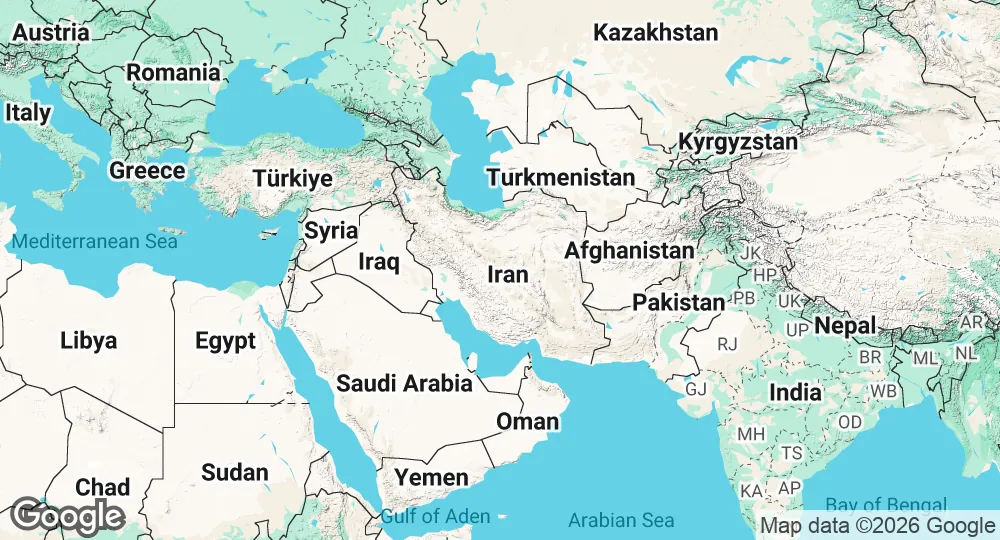
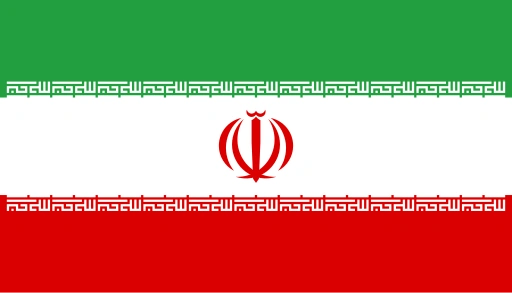
Map of Iran Flag of Iran
Active troops
610K
Reserve troops
350K
Defense budget
$9.5B2024
Share of GDP
2.0%
Population
91.6M2024
2026 Iran Conflict โ€” losses logged daily Open losses tracker โ†’

Armed Forces in 2026

Domain Strength Composition
Islamic Republic of Iran Air Force 659 aircraft 295 combat 160 helicopters 20 air bases
Islamic Republic of Iran Navy 112 warships 2 major combatants 2 submarines 8 naval bases
Ground Forces 6,676 vehicles 1,713 main battle tanks
Nuclear Forces Acquiring
Personnel 610,000 active 350,000 reserve 40,000 paramilitary

ATLAS Index (Aggregate Total of Land, Air and Sea strength)

Full ranking โ†’
Score & Pillar Breakdown World #25
40.1/ 100
Iran ranks #25 of 170 in the ATLAS Index (Aggregate Total of Land, Air and Sea strength) with a score of 40.1/100. The ATLAS Index scores Iran's overall capability on a 0โ€“100 scale from verifiable data across six pillars: manpower, ground forces, naval power, air power, nuclear deterrent and defense budget, each conventional pillar read after the availability proxy of its branch index (budget per point of the force).
Pillar Weight Score Basis
Manpower 10% 71.1 Active, reserve & paramilitary personnel
Ground forces 20% 52.7 ARMS inventory power: armour & artillery by type and era, attack helicopters, armament
Naval power 20% 27.0 SEAS inventory power: hulls by type, size and era, air wing, sustainment, armament
Air power 25% 38.0 AIRS inventory power: aircraft by type and generation, enablers, armament
Nuclear deterrent 10% 10.4 No declared nuclear capability
Defense budget 15% 40.1 Annual spending, purchasing-power adjusted
Availability modifier ground ×1.01 ยท naval ×1.20 ยท air ×1.04 Budget per point of each force, from the branch indexes

Country File

Defense Statistics & Key Metrics
Population91.6M (2024)
GDP$475.3 billion (2024)
GDP per capita$5,190
Military budget$9.5B (2024)
Share of GDP2.0% (2024)
Military spending per capita$104 (2024)
Inflation rate32.46% (2024)
Military Budget History
2020 โ€” $5.5B, 2.10% of GDP $5.5B 2020 2021 โ€” $8.8B, 2.30% of GDP $8.8B 2021 2022 โ€” $11B, 2.50% of GDP $11B 2022 2023 โ€” $11B, 2.30% of GDP $11B 2023 2024 โ€” $9.5B, 2.00% of GDP $9.5B 2024
Budget (US$) Share of GDP (0-2.5%)
Share of GDP (line): CIA World Factbook (public domain). Budget in US$ (bars): that share applied to World Bank GDP (CC BY 4.0). Estimates.
Geography
CapitalTehran
RegionAsia
Land area1,531,595 kmยฒ
Coastline2,440 km
Land borders5,440 km
Bordering countries7
CurrencyIRR
National Flag Adopted 1980
Flag of Iran
Aspect ratio4:7
ColorsRed, green, white
Compare this Country
๐Ÿ‡ฎ๐Ÿ‡ท Iran vs

Strategic Overview in 2026

Strategic Position

Iranโ€™s defense posture is shaped by a regional rivalry with Israel and the presence of United States military assets in the Middle East. The primary security objective is the preservation of the clerical-political system and the maintenance of territorial integrity. To achieve this, Tehran employs a "forward defense" doctrine, which utilizes a network of non-state actorsโ€”collectively known as the Axis of Resistanceโ€”in Lebanon, Syria, Iraq, and Yemen to project influence and establish a buffer zone.

Iran is a member of the Shanghai Cooperation Organization (SCO) and the BRICS group. Its strategic depth is increasingly supported by a deepening military-technical partnership with Russia, formalized through long-term cooperation agreements that include intelligence sharing and joint naval exercises in the Gulf of Oman. A 25-year strategic agreement with China encompasses economic and security cooperation, focusing on maritime stability and infrastructure.

Military Forces

The Iranian military is characterized by a dual-command structure consisting of the Islamic Republic of Iran Army (Artesh) and the Islamic Revolutionary Guard Corps (IRGC). The Artesh is responsible for conventional territorial defense, while the IRGC focuses on internal security and asymmetric regional operations. Both report to the Supreme Leader through the General Staff of the Armed Forces.

Total active personnel are approximately 610,000, including 350,000 in the Artesh and 190,000 in the IRGC. The Basij paramilitary force serves as a large-scale mobilization reserve, with several hundred thousand members available for internal security and auxiliary roles.

Ground Forces:

  • The Army Ground Force operates Karrar, Zulfiqar, and T-72S main battle tanks.
  • Armored units include M60A1 and Chieftain platforms, supported by BMP-2 infantry fighting vehicles and BTR-60 armored personnel carriers.
  • Artillery capabilities consist of Raad-1 and Raad-2 self-propelled howitzers and the Fajr-5 multiple launch rocket system.

Air and Air Defense Forces:

  • The Air Force (IRIAF) is undergoing modernization with the integration of Russian-made Su-35 multirole fighters and Yak-130 combat trainers.
  • Legacy platforms remain in service, including F-14 Tomcat, MiG-29, F-4 Phantom II, and F-5 Tiger II aircraft.
  • Integrated air defense is managed by the Air Defense Force, utilizing the indigenous Bavar-373 long-range system and the Russian S-300.

Naval Forces:

  • The Navy (IRIN) operates Moudge-class frigates and Jamaran-class destroyers.
  • Submarine forces include Kilo-class diesel-electric boats, Fateh-class coastal submarines, and Ghadir-class midget submarines.
  • The IRGC Navy (IRGCN) emphasizes asymmetric maritime warfare, utilizing Shahid Soleimani-class catamarans and swarms of fast attack craft armed with anti-ship missiles.

Specialized Capabilities:

  • The IRGC Aerospace Force maintains a diverse ballistic missile arsenal, including the Sejjil, Khorramshahr-4, and the Fattah-1 hypersonic glide vehicle.
  • The Quds Force conducts external unconventional warfare and oversees regional proxy coordination.
  • Cyber Defense Command manages offensive and defensive operations targeting critical infrastructure and communication networks.

Defense Industry

The Ministry of Defense and Armed Forces Logistics (MODAFL) manages the domestic defense industrial base through state-owned entities such as the Defense Industries Organization (DIO) and the Iran Aviation Industries Organization (IAIO). The industry is largely self-sufficient in the production of missiles, unmanned aerial vehicles (UAVs), and small arms.

Key indigenous programs include:

  • The Shahed and Mohajer series of loitering munitions and reconnaissance drones.
  • The Fateh-110 and Zolfaghar short-range ballistic missiles.
  • The Bavar-373 surface-to-air missile system.

Iran maintains an active defense export program, providing UAV technology and missile components to Russia and several nations in Africa and South America. Production lines focus on high-quantity, low-cost asymmetric assets to offset gaps in conventional aviation and heavy armor.

Strategic Trends

The 2025 and 2026 defense budgets reflect a shift toward high-technology modernization, with increased allocations for the IRGCโ€™s aerospace and cyber divisions. Defense spending is estimated at approximately 3% of GDP, though this figure excludes extra-budgetary funding derived from oil quotas and commercial activities.

Doctrinal shifts emphasize "deterrence by punishment," utilizing precision-guided munitions and drone swarms to target an adversary's critical infrastructure. Iran is also expanding its space-based capabilities, using the Simorgh and Ghaem-100 launch vehicles to deploy military communication and reconnaissance satellites. Modernization priorities include the acquisition of Russian Mi-28 attack helicopters and the development of long-range cruise missiles to extend the country's operational strike range.
Population, GDP, Inflation and Personnel: World Bank.
Military Expenditure: CIA World Factbook. Last updated on 4 August 2026. Suggest a change

Iranian Defense Manufacturing

Designed in Iran
Naval Shipbuilding 4 classes
Ghadir Midget submarineMoudge FrigateShahid Bagheri Drone carrierShahid Soleimani Missile corvette
Military Vehicles 2 models
Bani Hashim Karrar Main battle tankSafir 74 Medium Main Battle Tank
Missile Systems 20 systems
Shahab-3 BallisticQiam 1 BallisticAD-08 Majid Surface-to-AirBavar-373 Surface-to-AirDezful BallisticEmad BallisticFateh-110 BallisticFateh-313 BallisticFattah-1 BallisticGhadr-110 BallisticKheibar / Khorramshahr-4 BallisticKhordad 15 Surface-to-AirKhorramshahr BallisticQaem Surface-to-AirQaem-118 Surface-to-AirRaad-500 BallisticSejjil BallisticShahab-1 BallisticShahab-2 BallisticSoumar Cruise
Firearms 1 model
Khaybar KH2002 Assault rifle

In the News

All news โ†’
Iran Claims Drone Strikes on Al Minhad Air Base, UAE Denies Its Base Was Targeted
AUG 31, 2026

Iran Claims Drone Strikes on Al Minhad Air Base, UAE Denies Its Base Was Targeted

Iran's army said it attacked Al Minhad Air Base in the United Arab Emirates with drones on August 31, 2026. The Emirati defense ministry denied the base was targeted and said its air force engaged a drone approaching from Iran.

๐Ÿ‡ฆ๐Ÿ‡ช ๐Ÿ‡ฆ๐Ÿ‡บ ๐Ÿ‡ฎ๐Ÿ‡ท ๐Ÿ‡ฏ๐Ÿ‡ด ๐Ÿ‡บ๐Ÿ‡ธ
The US Navy Fields Four Minesweepers to Europe's 157, and Sailed Two From Japan to Hormuz
AUG 27, 2026

The US Navy Fields Four Minesweepers to Europe's 157, and Sailed Two From Japan to Hormuz

The United States decommissioned its four Bahrain-based Avenger-class mine hunters in September 2025 and shipped the hulls home in January 2026. When Iran began mining the Strait of Hormuz two months later, the Navy had to sail two of its last four minesweepers from Japan.

๐Ÿ‡ซ๐Ÿ‡ท ๐Ÿ‡ฌ๐Ÿ‡ง ๐Ÿ‡ฎ๐Ÿ‡ท ๐Ÿ‡ต๐Ÿ‡ฑ ๐Ÿ‡บ๐Ÿ‡ธ
Iran Has Lost Every Frigate and Corvette in Its Navy: 30 Hulls Gone in Five Months
AUG 12, 2026

Iran Has Lost Every Frigate and Corvette in Its Navy: 30 Hulls Gone in Five Months

GlobalMilitary.net fleet records attribute 30 Islamic Republic of Iran Navy hulls to the war that began on February 28, 2026. Every frigate and every corvette on the fleet list is marked sunk, leaving the regular navy without a single blue-water surface combatant.

๐Ÿ‡ฎ๐Ÿ‡ท ๐Ÿ‡ฎ๐Ÿ‡ฑ ๐Ÿ‡บ๐Ÿ‡ธ
Strait of Hormuz Tensions Live tracker

135 commercial ship transits of the Strait of Hormuz were recorded in the 30 days through August 23, 2026. Daily activity data, incident log and force balance, updated from official reports.

Frequently Asked Questions

How large is Iran's military?
Iran has 610,000 active military personnel with an additional 350,000 in reserve. This includes army, navy, and air force service members.
What is Iran's defense budget?
Iran's annual defense budget is approximately $9.5 billion. This covers personnel costs, equipment procurement, operations, and maintenance of military forces.
How does Iran rank militarily in the world?
Iran ranks #25 globally on the ATLAS Index with a score of 40.1 out of 100. This composite index measures military capability across manpower, ground forces, naval power, air power, nuclear deterrent, and defense budget, adjusted for equipment quality and readiness.
Does Iran have nuclear weapons?
No, Iran does not possess nuclear weapons and is a non-nuclear weapon state.
How many aircraft does Iran's air force have?
Iran operates 659 military aircraft including 295 combat aircraft. The fleet includes fighters, transport planes, helicopters, and training aircraft.
How large is Iran's navy?
Iran's navy operates 112 vessels including 2 submarines. The fleet includes surface combatants, support ships, and coastal patrol craft.
How many tanks does Iran have?
Iran operates approximately 1,713 main battle tanks. This figure includes both active inventory and reserve stocks available for mobilization.
What percentage of GDP does Iran spend on defense?
Iran spends approximately 2.0% of its GDP on defense. This meets the NATO target of 2% of GDP.
What is Iran's military personnel per capita?
Iran has approximately 6.7 active military personnel per 1,000 citizens. This ratio reflects the country's military manpower relative to its population of 91,567,738.
Does Iran have submarines?
Yes, Iran operates 2 submarines. The submarine fleet may include nuclear-powered attack submarines, ballistic missile submarines, and conventional diesel-electric boats depending on the country's naval doctrine.
Does Iran have paramilitary forces?
Yes, Iran maintains 40,000 paramilitary personnel. These forces typically include gendarmerie, border guards, coast guard, and internal security troops that supplement regular military capabilities.
Latest Data Updates
  1. AUG 42026 Updated Global Military Index updated in a site-wide editorial pass
  2. JUL 272026 Updated Global Military Index updated
  3. JUL 242026 Updated Global Military Index updated
  4. JUL 162026 Updated Global Military Index updated in a site-wide editorial pass
  5. JUN 162026 Updated Yearly statistics, military spending and Global Military Index updated
  6. APR 182026 Updated Description updated
  7. JAN 212026 Updated Rank insignia updated (150 entries)