Guinea Military Forces
Guinea ranks #127 of 170 militaries worldwide in 2026, with 9,700 active troops. The Guinean Army fields 8 main battle tanks; the Air Force flies 7 aircraft. Guinea has no nuclear weapons.
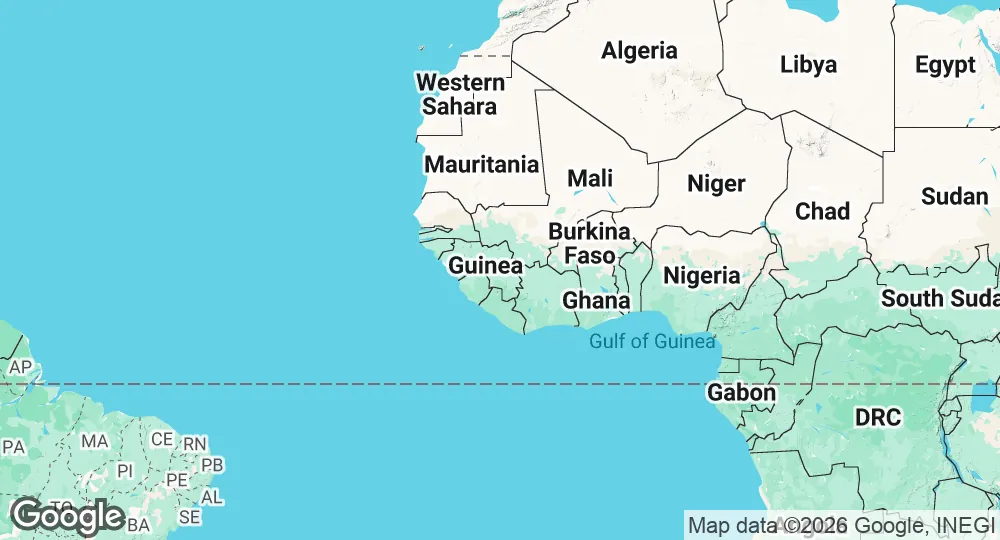
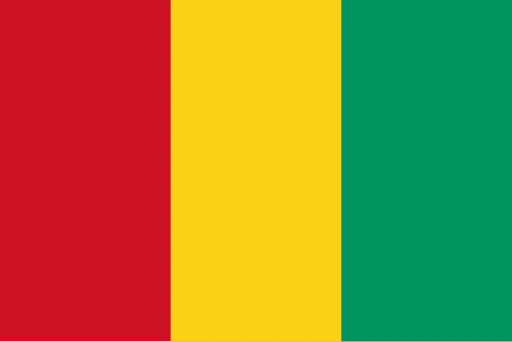
Armed Forces in 2026
| Domain | Strength | Composition |
|---|---|---|
| Air Force | 7 aircraft | 7 helicopters |
| Ground Forces | 8 tanks | |
| Personnel | 9,700 active | 1,500 paramilitary |
ATLAS Index (Aggregate Total of Land, Air and Sea strength)
Full ranking →| Pillar | Weight | Score | Basis |
|---|---|---|---|
| Manpower | 10% | 23.3 | Active, reserve & paramilitary personnel |
| Ground forces | 20% | 16.0 | ARMS inventory power: armour & artillery by type and era, attack helicopters, armament |
| Naval power | 20% | 0.0 | SEAS inventory power: hulls by type, size and era, air wing, sustainment, armament |
| Air power | 25% | 9.0 | AIRS inventory power: aircraft by type and generation, enablers, armament |
| Nuclear deterrent | 10% | 0.0 | No declared nuclear capability |
| Defense budget | 15% | 15.5 | Annual spending, purchasing-power adjusted |
| Availability | modifier | ground ×0.91 · naval ×1.00 · air ×1.20 | Budget per point of each force, from the branch indexes |
Country File
| Population | 14.8M (2024) |
| GDP | $25.0 billion (2024) |
| GDP per capita | $1,695 |
| Military budget | $525M (2024) |
| Share of GDP | 2.1% (2024) |
| Military spending per capita | $36 (2024) |
| Inflation rate | 8.12% (2024) |
| Capital | Conakry |
| Region | Africa |
| Land area | 245,717 km² |
| Coastline | 320 km |
| Land borders | 3,399 km |
| Bordering countries | 6 |
| Currency | GNF |
Strategic Overview in 2026
The Republic of Guinea maintains a defense posture centered on internal stability, border protection against Sahelian militant spillover, and maritime security in the Gulf of Guinea. Since the 2021 coup d’état, the military has occupied a central role in national governance under the National Committee of Reconciliation and Development (CNRD), led by General Mamady Doumbouya.
Strategic Position
Guinea’s security environment is defined by its proximity to the volatile Sahel region and its position on the Atlantic coast. The primary security concern is the potential southward expansion of jihadist insurgencies from neighboring Mali. To address this, Guinea has increased bilateral security cooperation with other junta-led states, signing 22 cooperation agreements with Burkina Faso in 2025 covering defense and intelligence sharing.
In June 2025, the government established the High Council for National Defense and Security (CSDSN) by presidential decree. This supreme decision-making body, chaired by the Head of State, coordinates policies regarding national sovereignty, resource protection, and crisis mobilization. While Guinea remains a member of the Economic Community of West African States (ECOWAS) and the African Union (AU), its relations with these bodies are frequently strained due to the ongoing political transition. Consequently, Guinea has diversified its security partnerships, increasing technical and military cooperation with Russia and Turkey while maintaining traditional, though fluctuating, ties with France.
Military Forces
The Guinean Armed Forces (Forces Armées Guinéennes) consist of the Army, Navy, Air Force, and the National Gendarmerie. The military command is centralized under the Chief of the General Staff, who reports to the Minister of Defense and the Head of State.
Personnel Active-duty personnel are estimated at 12,000 to 15,000. This is supplemented by a paramilitary National Gendarmerie of approximately 10,000, which performs internal security and border patrol duties. The Republican Guard provides specialized protection for government officials and state infrastructure.
Army The Army is the primary service branch and operates a mix of legacy Soviet-era and modern multi-role equipment. The inventory includes T-54/55 main battle tanks and PT-76 light amphibious tanks. Armored transport is provided by BMP-1 infantry fighting vehicles and BTR-40, BTR-60, and BTR-80 personnel carriers. In 2025, the Army continued the integration of approximately 500 armored vehicles, including Spartan and Cougar models sourced from the UAE-based Streit Group.
Air Force The Air Force maintains limited operational capacity. Its combat inventory includes Su-25 ground-attack aircraft and a small number of MiG-21 fighters, though the serviceability of the latter is low. Rotary-wing assets include Mi-8 and Mi-17 transport helicopters and Mi-24 attack helicopters.
Navy The Navy focuses on coastal surveillance and anti-piracy operations. It operates a fleet of small patrol craft and fast intervention boats. Recent acquisitions include 20 Triton 850 fast intervention boats for maritime security duties.
Specialized Units The Special Forces Group (GPS) is an elite autonomous unit that played a central role in the 2021 transition. It is equipped with specialized light weaponry and modern tactical gear and is primarily tasked with high-priority security operations and regime protection.
Defense Industry
Guinea lacks a substantive domestic defense manufacturing sector and relies almost entirely on foreign imports for military hardware. Procurement is characterized by a shift toward non-Western suppliers. Deliveries from the UAE-based Streit Group in 2024–2025 — Spartan and Cougar armored vehicles and Triton 850 patrol boats, under a 2023 contract reported to be paid in part with mining concessions — are the largest recent addition to the inventory. Russia continues to provide maintenance support for the military’s legacy Soviet-era inventory.
Strategic Trends
Defense spending is estimated at approximately 2% of GDP, with recent budgets showing a trend toward increasing expenditures to fund modernization and border security. A primary strategic priority is the professionalization of the officer corps and the institutionalization of the CSDSN to manage the transition toward scheduled elections in 2025 and 2026.
Procurement priorities are shifting toward unmanned aerial systems (UAS) and improved intelligence, surveillance, and reconnaissance (ISR) capabilities to monitor the northern borders. The military is also seeking to deepen its engagement with Russia’s Africa Corps for training and advisory services, reflecting a broader regional trend of reduced reliance on Western military assistance. Constraints include the high cost of maintaining aging Soviet-era equipment and the technical challenges associated with integrating diverse hardware from multiple international suppliers.
Military Expenditure: CIA World Factbook. Last updated on 30 August 2026. Suggest a change
Frequently Asked Questions
How large is Guinea's military?
What is Guinea's defense budget?
How does Guinea rank militarily in the world?
Does Guinea have nuclear weapons?
How many aircraft does Guinea's air force have?
How many tanks does Guinea have?
What percentage of GDP does Guinea spend on defense?
What is Guinea's military personnel per capita?
Does Guinea have paramilitary forces?
- AUG 302026 Updated Removed an unsourced claim about the condition of recently delivered armored vehicles from the overview
- AUG 42026 Updated Global Military Index updated in a site-wide editorial pass
- AUG 32026 Updated Global Military Index updated
- JUL 162026 Updated Global Military Index updated in a site-wide editorial pass
- JUN 162026 Updated Yearly statistics, military spending and 2 more fields updated
- APR 82026 Updated Paramilitary personnel updated
- JAN 172026 Updated Main battle tank count and Global Military Index updated