Cameroon Military Forces
Cameroon ranks #132 of 170 militaries worldwide in 2026, with 25,400 active troops. The Air Force flies 35 aircraft, including 6 combat aircraft. Cameroon has no nuclear weapons.
Armed Forces in 2026
| Domain | Strength | Composition |
|---|---|---|
| Air Force | 35 aircraft | 6 combat 21 helicopters |
| Personnel | 25,400 active | 9,000 paramilitary |
ATLAS Index (Aggregate Total of Land, Air and Sea strength)
Full ranking →| Pillar | Weight | Score | Basis |
|---|---|---|---|
| Manpower | 10% | 29.7 | Active, reserve & paramilitary personnel |
| Ground forces | 20% | 0.0 | ARMS inventory power: armour & artillery by type and era, attack helicopters, armament |
| Naval power | 20% | 0.0 | SEAS inventory power: hulls by type, size and era, air wing, sustainment, armament |
| Air power | 25% | 16.8 | AIRS inventory power: aircraft by type and generation, enablers, armament |
| Nuclear deterrent | 10% | 0.0 | No declared nuclear capability |
| Defense budget | 15% | 15.5 | Annual spending, purchasing-power adjusted |
| Availability | modifier | ground ×0.87 · naval ×1.00 · air ×0.95 | Budget per point of each force, from the branch indexes |
Country File
| Population | 29.1M (2024) |
| GDP | $53.3 billion (2024) |
| GDP per capita | $1,830 |
| Military budget | $533M (2024) |
| Share of GDP | 1.0% (2024) |
| Military spending per capita | $18 (2024) |
| Inflation rate | 4.53% (2024) |
| Capital | Yaoundé |
| Region | Africa |
| Land area | 472,710 km² |
| Coastline | 402 km |
| Land borders | 4,591 km |
| Bordering countries | 6 |
| Currency | XAF |
Strategic Overview in 2026
Strategic Position
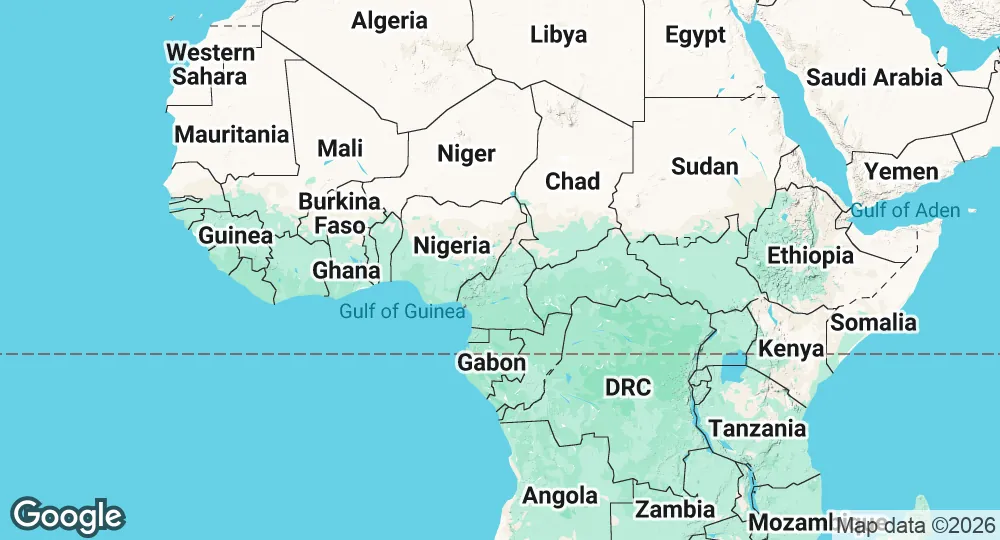
Cameroon occupies a position in Central Africa bordering Nigeria, Chad, the Central African Republic (CAR), the Republic of the Congo, Gabon, and Equatorial Guinea. Its defense doctrine is centered on territorial integrity, regime stability, and the management of three concurrent security threats: the Boko Haram and Islamic State West Africa Province (ISWAP) insurgency in the Far North, separatist unrest in the Anglophone Northwest and Southwest regions, and maritime piracy in the Gulf of Guinea.
The military participates in the Lake Chad Basin Commission’s Multinational Joint Task Force (MNJTF) alongside Nigeria, Chad, Niger, and Benin. Historically, Cameroon maintained a defense partnership with France, which remains a source of training and advisory support. In recent years, the government has diversified its defense relations to reduce reliance on Western partners who have conditioned aid on human rights standards. In December 2023, Cameroon ratified a five-year defense cooperation agreement with Russia focusing on joint training, counter-terrorism, and maritime security. Additional bilateral agreements were formalized with the United Kingdom and Egypt in late 2023. As of 2026, the military maintains operational coordination with United States Africa Command (AFRICOM) for intelligence and surveillance support, particularly regarding counter-terrorism and Gulf of Guinea security.
Military Forces
The Cameroon Armed Forces (Forces Armées Camerounaises or FAC) consist of the Army, Navy, and Air Force, supported by the National Gendarmerie and the Firefighter Corps. Total active personnel is approximately 40,000, with an additional 12,500 in paramilitary roles.
The Army is organized into three joint military regions and ten land sectors. Specialized units operate with a high degree of autonomy, most notably the Rapid Intervention Battalion (BIR) and the Presidential Guard (GP). The BIR is an elite force reporting directly to the presidency and is the primary unit engaged in counter-insurgency operations.
In July 2025, a presidential decree formalized a leadership reshuffle. General René Claude Meka remains the Chief of the General Staff of the Armed Forces. Major General Saly Mohamadou assumed the role of Chief of Staff of the Army, while Brigadier General Benoît Bède Eba Eba was appointed Chief of Staff of the Air Force.
Equipment and Capabilities:
-
Army: The ground forces operate main battle tanks including T-55 and Chinese Type 59 models. Fire support and mobility are provided by Chinese WMA301 tank destroyers, French VBL scout cars, AML-90 armored cars, and South African Ratel infantry fighting vehicles. Artillery assets include towed howitzers and multi-barrel rocket launchers.
-
Air Force: The inventory includes a small fleet of Dassault/Dornier Alpha Jets for light attack, though serviceability is intermittent. Transport capabilities are supported by C-130 Hercules, CN235, and MA60 aircraft. The rotary-wing fleet includes Mi-24 Hind attack helicopters, Mi-17 and Bell 412 utility helicopters, and Gazelle light helicopters.
-
Navy: Maritime forces focus on coastal patrol and anti-piracy. The fleet consists of patrol craft, including Ametista-class, P48S class, and Rodman-class vessels. Operations are centered at the naval base in Douala.
Defense Industry
Cameroon lacks a large-scale domestic arms manufacturing sector and remains almost entirely dependent on foreign imports. The Ministry of Defense is finalizing a textile production facility in Mengong to achieve self-sufficiency in military uniforms and personal gear. Domestic capabilities are otherwise limited to the maintenance and repair of imported vehicles and small arms. Primary suppliers include China, Russia, France, and Israel, the latter providing equipment and training specifically for the BIR.
Strategic Trends
Defense spending for 2025 is approximately 1% of GDP, representing a raw increase in funding to support ongoing internal security operations. A primary priority in 2025 and 2026 is the security of the electoral process during the presidential transition period.
Force modernization focuses on the acquisition of Intelligence, Surveillance, and Reconnaissance (ISR) assets, specifically Unmanned Aerial Vehicles (UAVs), to monitor porous borders in the Far North and the dense terrain of the Anglophone regions. The military faces persistent constraints, including aging equipment in the regular branches and the logistical burden of multi-theater deployments. There is a visible shift toward Russian and Chinese procurement for heavy equipment and technical training, driven by a desire for non-conditional security assistance. In the maritime domain, current procurement priorities involve upgrading coastal radar surveillance and increasing the frequency of joint exercises with regional navies to secure oil and gas infrastructure in the Gulf of Guinea.
Military Expenditure: CIA World Factbook. Last updated on 4 August 2026. Suggest a change
Frequently Asked Questions
How large is Cameroon's military?
What is Cameroon's defense budget?
How does Cameroon rank militarily in the world?
Does Cameroon have nuclear weapons?
How many aircraft does Cameroon's air force have?
What percentage of GDP does Cameroon spend on defense?
What is Cameroon's military personnel per capita?
Does Cameroon have paramilitary forces?
- AUG 42026 Updated Global Military Index updated in a site-wide editorial pass
- AUG 32026 Updated Global Military Index updated
- JUL 162026 Updated Global Military Index updated in a site-wide editorial pass
- JUN 162026 Updated Yearly statistics, military spending and 2 more fields updated
- JAN 132026 Updated Description updated