Strategic Position
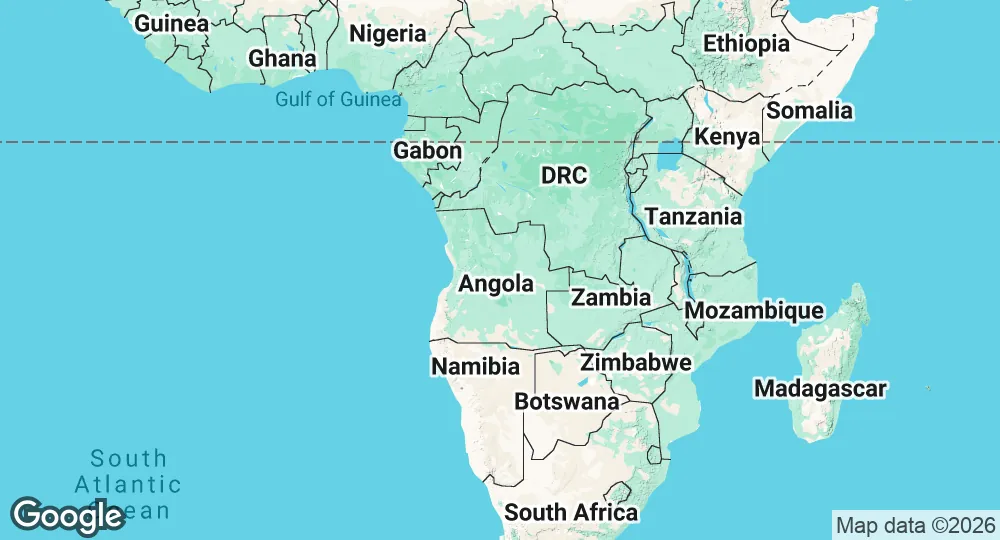
Angola occupies a central geopolitical position in Southern and Central Africa, acting as a regional mediator and a stabilizing force within the Southern African Development Community (SADC) and the International Conference on the Great Lakes Region (ICGLR). Its primary security concerns involve border stability, specifically regarding the conflict in the eastern Democratic Republic of the Congo (DRC) and the security of the Cabinda exclave. Under the "Luanda Process," Angola has assumed a leading role in mediating between the DRC and Rwanda.
Defense doctrine emphasizes non-alignment and the diversification of security partnerships. Historically reliant on Soviet and Russian equipment and training, the state has recently expanded bilateral defense cooperation with the United States, China, Brazil, Spain, and the United Arab Emirates. A 2024 defense agreement with the United States established a Joint Defense Committee to cooperate on maritime security, logistics, and peacekeeping capabilities. Additionally, Angola remains a contributor to African Union and SADC peacekeeping operations, maintaining a focus on regional maritime domain awareness along its 1,600-kilometer Atlantic coastline.
Military Forces
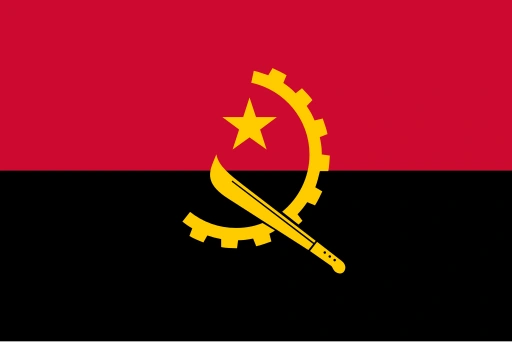
The Angolan Armed Forces (Forças Armadas Angolanas—FAA) are organized into three primary branches: the Army, the National Air Force, and the Navy. The President serves as the Commander-in-Chief, with the Ministry of National Defense and Homeland Veterans overseeing administrative and procurement policy. Total active personnel are approximately 110,000, supported by a reserve force of roughly 50,000 and paramilitary elements including the Presidential Guard and the Rapid Intervention Police.
Angolan Army (Exército Angolano)
The Army is the largest branch, numbering approximately 90,000 personnel. It is structured into six military regions (North, South, East, Central, Luanda, and Cabinda). Operational units include motorized infantry brigades, tank brigades, and specialized artillery and engineering regiments. The inventory consists largely of legacy Soviet platforms, including T-72 and T-55 main battle tanks, BMP-1 and BMP-2 infantry fighting vehicles, and BTR-series armored personnel carriers. The Army also operates BM-21 Grad multiple rocket launchers and various anti-aircraft systems.
National Air Force of Angola (Força Aérea Nacional de Angola—FANA)
FANA is one of the more capable air arms in Sub-Saharan Africa, operating from several modernized airbases including Catumbela and Lubango. The fighter fleet features Su-30K and Su-27 multirole aircraft, alongside legacy MiG-23 and Su-22 platforms. Training and light attack capabilities are provided by K-8W Karakorum aircraft. Transport capacity is being modernized with the induction of Airbus C-295 aircraft configured for maritime surveillance and logistics. The rotary-wing fleet includes Mi-24/35 attack helicopters and Mi-8/17 transport helicopters.
Angolan Navy (Marinha de Guerra Angolana—MGA)
The MGA is undergoing a major modernization program to address piracy and illegal fishing. The fleet transition centers on the acquisition of BR71 Mk II corvettes, with the first of three units scheduled for delivery in 2026. These vessels are equipped for anti-ship and anti-air warfare. The Navy also operates Macaé-class patrol vessels, Ocean Eagle 43 ocean patrol craft, and LCT-200 landing craft. Specialized naval units include the Marines Brigade and the Special Operations Marines (FOE).
Specialized Capabilities
The Directorate of Special Forces oversees the BRIFE (Special Forces Brigade), which includes commando and special operations battalions based at Cabo Ledo. In 2025, the government approved a National Cybersecurity Strategy and established plans for a Cybersecurity Academy to defend critical telecommunications and energy infrastructure.
Defense Industry
Angola’s domestic defense industry is managed by the state conglomerate Simportex. While the country remains heavily dependent on foreign imports, a relaunch of the military industrialization program in 2025 aims to increase self-sufficiency. Current initiatives include the establishment of assembly lines for military trucks and light armored vehicles, and the development of centers for the repair and modernization of light infantry weapons and artillery systems.
Strategic Trends
The Angolan defense budget is projected to reach approximately $1.9 billion by 2026, representing a steady increase in spending focused on technical modernization. A primary objective is the transition from a legacy Soviet force structure to a more technologically capable military. Procurement priorities emphasize maritime domain awareness, air defense, and electronic warfare capabilities.
A key constraint facing the FAA is the high cost of maintaining aging Cold War-era equipment. Future force structure shifts indicate a move toward professionalization and the integration of space-based assets, with ongoing investments in satellite ground station infrastructure expected to enhance military communications and reconnaissance by 2026. Challenges remain in aligning domestic technical proficiency with the high-specification systems currently being acquired from European and Middle Eastern suppliers.