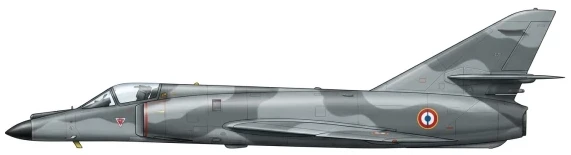
The Dassault-Breguet Super Étendard is a French carrier-borne strike fighter designed and produced by Dassault-Breguet. It entered service with the French Navy in June 1978 and was operated by the Argentine Navy and, on a temporary lease, by Iraq. It is chiefly associated with the AM 39 Exocet anti-ship missile, used against British shipping during the 1982 Falklands War and against tankers in the Persian Gulf during the Iran-Iraq War.
Development
The Étendard IVM was to have been replaced by a navalised SEPECAT Jaguar, the Jaguar M, but the project suffered handling problems on one engine and slow throttle response that complicated carrier recovery after engine failure; the French government cancelled it in 1973. Competing replacements included the LTV A-7 Corsair II and the Douglas A-4 Skyhawk. Dassault offered an improved Étendard IVM with a more powerful engine, new wing and revised avionics, marketed as the only fully French candidate and cheaper than its rivals; the French Navy accepted it in 1973. The first of three prototypes, a converted Étendard IVM, flew on 28 October 1974. An intended buy of 100 aircraft was reduced to an order for 60 with 20 options, and finally to 71 delivered from June 1978. Fifteen were built in the first production year, allowing the first squadron to form in 1979, at a rate of about two aircraft per month. Argentina, the sole export customer, ordered 14. Manufacturing ended in 1983.
Design
The Super Étendard retained the Étendard IV airframe: a small, single-engined, mid-wing all-metal aircraft with swept flying surfaces and folding wings swept about 45 degrees. Power came from a non-afterburning SNECMA Atar 8K-50 turbojet rated at 49 kN (11,025 lbf). Sensors comprised the Thomson-CSF Agave radar, derived from the Mirage F1's Cyrano IV and required for Exocet launch, with a UAT-40 central computer integrating navigation, radar display and weapons control. From the 1990s, 48 aircraft received the UAT-90 computer, Thomson-CSF Anemone radar with nearly double the range of Agave, a redesigned HOTAS cockpit and life-extension work, at 15 aircraft per year. Later work added improved ECM, night-vision-goggle compatibility, a GPS-aided inertial system and the Damocles laser designator pod.
Armament
Fixed armament was two 30 mm DEFA 552 cannon with 125 rounds per gun. Four underwing and two under-fuselage hardpoints carried up to 2,100 kg (4,600 lb), including one AM-39 Exocet, one Air-Sol Moyenne Portée nuclear missile, two AS-30L, two Matra Magic air-to-air missiles, or four Matra pods of 18 SNEB 68 mm rockets. Unguided and laser-guided bombs were carried, along with provision for one AN-52 free-fall nuclear bomb, a reconnaissance pod and a buddy refuelling pod. The aircraft could not land aboard ship without jettisoning unexpended ordnance.
Operational History
French deliveries began in 1978, Flottille 11F becoming operational in February 1979; three operational squadrons and a training unit flew the type from Clemenceau and Foch, typical air wings including 16 Super Étendards. First combat came over Lebanon during Operation Olifant, with strikes on Syrian positions on 22 September 1983 and on an Islamic Amal camp at Baalbeck on 17 November 1983. Super Étendard Modernisé aircraft flew 400 sorties during Allied Force over Serbia in 1999, then Enduring Freedom from Charles de Gaulle from 21 November 2001, Operation Anaconda from 2 March 2002, and further Afghan deployments in 2004, 2006, 2007, 2008 and 2010–2011, frequently designating targets for Rafales. They flew with Task Force 473 during Opération Harmattan over Libya in 2011 and Opération Chammal from late 2015; the last launch from Charles de Gaulle was on 16 March 2016 and the type retired on 12 July 2016.
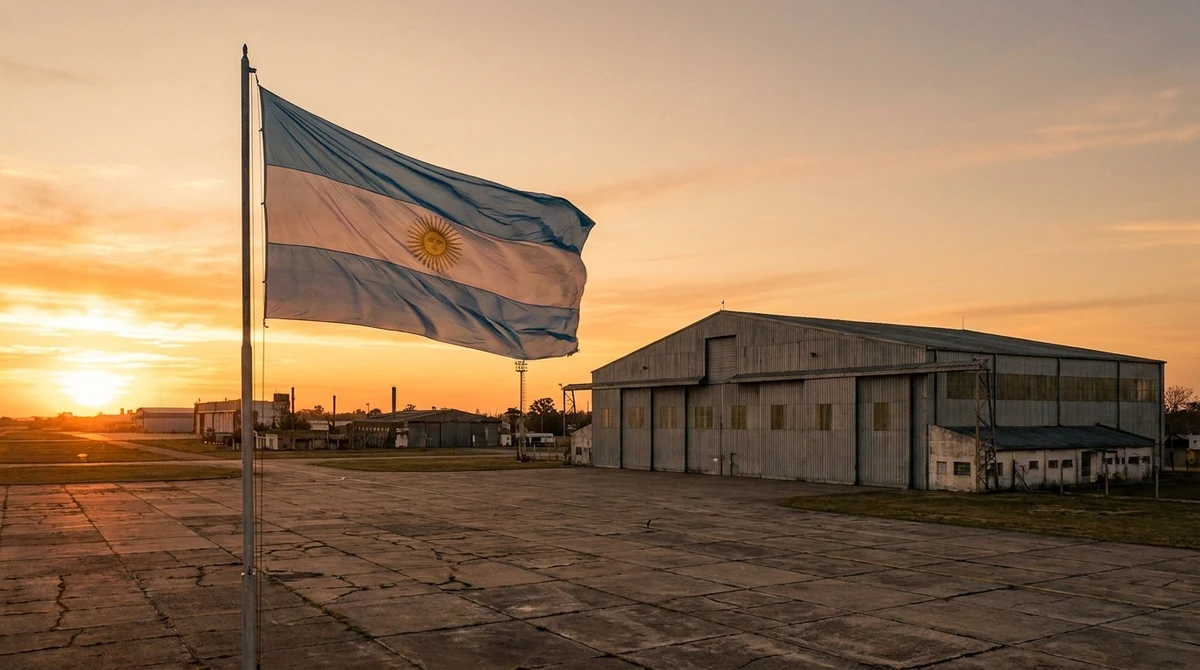
Argentina ordered 14 aircraft in 1979 after a United States arms embargo; five airframes and five Exocets arrived between August and November 1981. Four aircraft of the 2nd Naval Squadron at Río Grande were operational in 1982. On 4 May two aircraft, guided by a P-2H Neptune, crippled HMS Sheffield; on 25 May two Exocets struck Atlantic Conveyor. Both ships later sank under tow. British planning for Operation Mikado aimed at destroying the aircraft on the ground. Argentina retired the type on 17 May 2023.
Five aircraft were loaned to Iraq from 8 October 1983 pending Mirage F1EQ deliveries. Operations over the Persian Gulf began in March 1984, with 34 attacks on Iranian shipping that year. One was reportedly downed by an Iranian F-4E on 2 April 1984; Iran claimed three in total, while France stated four of the five were returned in 1985.
Variants
- Super Étendard: Initial production strike fighter with Atar 8K-50 engine, Agave radar and UAT-40 computer.
- Super Étendard Modernisé (SEM): 1990s upgrade with UAT-90 computer, Anemone radar, HOTAS cockpit and ASMP capability, applied to 48 French aircraft.